
Concrete Shear Transfer Across a Joint
Last updated March 10, 2026
By Ian Story
When a composite concrete member is stressed in flexure, it needs to transfer shear flow across any longitudinal joints in the member. Take, for example, the classic residential footing: a tall stem wall with an enlarged T footing at the base. The two sections may be poured at different times, creating a joint between the footing and the stem wall.
ACI provides two methods for transferring flexural shear across a cold joint: bond strength (under section 16.4) and shear friction (under section 22.9).
The interface shear stress due to flexure for a cracked reinforced concrete member is calculated by the following formula:
![\[v=\frac{V}{bd}\]](https://modearchitecture.com/wp-content/ql-cache/quicklatex.com-21864b0db34acb406c470dc1e8ba1ce5_l3.png "Rendered by QuickLaTeX.com")
Note that this is different from the classic shear flow equation for an elastic rectangular beam, 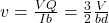 .
.
ACI uses this same form of the equation to calculate the concrete component of one-way shear strength (simplified to the core concept):
![\[V_c=2\sqrt{f_c'}bd\]](https://modearchitecture.com/wp-content/ql-cache/quicklatex.com-3648c3cccd901ae296e8c77b2b0ca7ca_l3.png "Rendered by QuickLaTeX.com")
Where the internal “interface shear” stress for concrete is  . For 2,500 psi concrete, this works out to
  100 psi. Note too that the strength reduction factor for interface shear is the same as for regular shear through concrete members.
When new concrete is poured against old concrete in a cold joint, the bond strength between the two layers (due to cohesion and aggregate interlock) is 80 psi (independent of concrete strength), which is a significant portion of the internal shear stress of 2,500 psi concrete. ACI requires one of two conditions to use this bond strength. Either:
- A minimum amount of shear transfer reinforcement is provided across the joint and developed on each side of the connection. For a 6 inch thick stem wall, the minimum rebar is #4 @ 39″ o/c. For an 8 inch thick stem wall, the minimum rebar is #4 @ 29″ o/c; or
- The joint is roughened to 1/4″ profile and cleaned.
If either case is met, the bond between concrete layers is almost as strong as if the concrete were cast monolithically. If both are true (shear transfer reinforcement and a roughened joint), then the available bond strength becomes significantly higher than the base shear capacity of the concrete itself (300+ psi, depending on reinforcement ratio).
To improve the joint strength even further, we can alternatively use the shear friction provisions under ACI section 22.9. Note that concrete bond strength and shear friction are considered separate shear transfer modes and cannot be used together – you use whichever gives the larger value instead of adding them together.
Let’s consider a non-roughened joint with shear friction reinforcement crossing the interface. Let’s further say that we want to develop the full 100 psi interface shear capacity that would make the joint equivalent to 2,500 psi concrete (with no stirrups for shear reinforcement). Using  for smooth concrete, each #4 bar gives a shear transfer capacity of 7,050 pounds. That works out to a tributary area of 70 square inches per bar to match the base concrete strength. For a 6 inch stem wall, this requires one bar every 11.7 inches. For an 8 inch stem wall, this requires one bar every 8.8 inches.
Note that the shear friction mode is much less efficient than the concrete bond mode. These are two different conceptual models. The flexural concrete bond method described in ACI section 16.4 assumes a pre-slip state, where the layers are held together primarily by aggregate interlock and cohesion, with assistance from the crossing reinforcement. The shear friction model, on the other hand, assumes fully yielded rebar holding the joint together by friction after it has already begun to slip, thereby assuming that the concrete bond has already broken.